
If you specify, buy, or lay concrete in the UK, this guide is for you – builders, site managers, architects, and confident DIYers. It explains how mixes are classified, what the common types do, and where they’re typically used.
Two important points upfront:
- Concrete should always be specified to site conditions (including the type of ground you’re pouring into, weather exposure and amunts of concrete). National standards exist for a reason. We’ll reference them below.
- EKA Concrete provides quality concrete mixed to industry standards and practical advice, but your on-site contractor or structural engineer should make the final call on mix selection. We’ll happily batch concrete to their spec and help with the logistics.
How concrete is classified in the UK
By strength class (C-numbers)
UK concrete is specified using strength classes written as C8/C10, C15, C20/25, C25/30, C30/37, C40/45, etc.
- The first number is the characteristic cylinder strength (MPa).
- The second number is the characteristic cube strength (MPa).
- Many UK sites still talk in cube strengths, so “C30” on a drawing often corresponds to class C25/30.
By composition or behaviour
You’ll also hear mixes described by what they do or contain:
- Ordinary/normal-weight concrete (general work).
- High-strength concrete (C40/45 and above).
- Self-compacting concrete that flows into congested rebar without vibration.
- Special cements or additions (e.g. air-entrainment, fibres) to suit exposure or placement needs
By purpose (“designated” concretes)
For common applications, “designated concretes” bundle strength, durability and minimum cementitious content into simple labels – for example, GEN, RC, and PAV families used widely in UK house-building and paving. (You’ll recognise site terms like GEN 1, RC28/35, PAV1/PAV2.)
Common concrete strengths & typical uses
The mixes below reflect the most commonly ordered strength classes for domestic and light commercial work in the UK. They’re shown with typical site uses to help conversations at quote or call-off stage. Final suitability should always be confirmed by your contractor or structural engineer.
C8 (GEN 0)
A low-strength, non-structural mix often used where strength is not a requirement.
Typical uses:
Blinding layers, kerb bedding, haunching, cavity filling, temporary works.
Strength:
8 N/mm² at 28 days.
C10 (GEN 1)
A versatile general-purpose concrete used across housing and groundwork projects.
Typical uses:
Strip foundations for small works, trench fill, drainage surrounds, floor blinding.
Strength:
10 N/mm² at 28 days.
C15 (GEN 2)
A light-duty structural concrete suitable for domestic work with no steel reinforcement.
Typical uses:
House floors without embedded metal, shed and conservatory bases, paths and steps.
Strength:
15 N/mm² at 28 days.
C20 (GEN 3)
A widely used domestic concrete offering a step up in strength for heavier loads.
Typical uses:
Oversites and internal floor slabs without reinforcement, foundations for extensions, patio base concrete.
Strength:
20 N/mm² at 28 days.
C25
A common choice where greater strength or reinforcement is required.
Typical uses:
Foundations and trench fill for houses and extensions, reinforced bases, kerbing, general groundworks.
Strength:
25 N/mm² at 28 days.
C30 (often specified as PAV1 with added Air Entrainer)
A durable concrete used where surfaces are exposed to weather or vehicle traffic.
Typical uses:
Driveways, hardstandings, garages, external slabs, workshops, paved areas subject to cars or light vans.
Air-entrained versions are frequently specified for external paving to improve resistance to freeze–thaw cycles.
Strength:
30 N/mm² at 28 days.
C35 (often specified as PAV2 with added Air Entrainer)
A higher-strength mix suited to heavier loading and more demanding conditions.
Typical uses:
Commercial yards, agricultural storage areas, reinforced slabs, areas trafficked by machinery or frequent vehicles.
Strength:
35 N/mm² at 28 days.
C40
A strong structural concrete used mainly on commercial or infrastructure projects.
Typical uses:
Structural beams, heavy foundations, roadworks, agricultural yards, HGV parking areas, tanks and pits.
Strength:
40 N/mm² at 28 days.
Important note on mix selection
The examples above describe typical usage, not a specification. Ground conditions, exposure, reinforcement, thickness and curing all affect performance. Your contractor or structural engineer should confirm the final strength class, durability requirements and any additives before ordering.
EKA Concrete will batch to that agreed specification on site and adjust volumes to suit what is required. With the flexibility of a volumetric – mix on site truck.
Further reading & resources
- CIRIA C766 – crack control in concrete (overview). ciria.org
- NHBC Standards – housing practice and acceptance criteria (concrete-related sections).
- The Concrete Society – technical notes and FAQs (e.g., crack control summary referencing C766). Concrete Society

How to choose the right concrete
Concrete selection should reflect what it needs to carry, what it will be exposed to, and how it will be placed on site.
The points below are intended to support conversations with your contractor or structural engineer, not replace a formal specification.

Loads (what will it be carrying?)
Domestic slabs, paths and driveways
Most home projects fall into low to mid-range strength classes. The right choice depends on slab thickness, ground preparation and whether vehicles will use the surface.
Garages, workshops and small extensions
Heavier loads or larger spans usually call for a higher strength class and, in some cases, reinforcement. This should be confirmed at the design stage.
Vehicle traffic and point loads
Areas subject to cars, vans or repeated turning forces need careful thought. Thicker slabs, suitable joint layout and an appropriate strength class all play a part in long-term performance.

Exposure (what will it be exposed to?)
Freeze–thaw and winter conditions
External concrete can suffer surface damage during cold weather, particularly where de-icing salts are used. Air-entrained mixes are often specified to improve resistance and durability.
Agricultural environments (slurry and silage)
Concrete exposed to animal slurry, silage effluent or wash-down water faces aggressive conditions over time. Floors and yards in these settings usually require a higher-quality mix, good surface finish and proper falls to aid drainage. Local experience and professional advice are key here.

Placement and access (how will it be installed?)
Standard pours
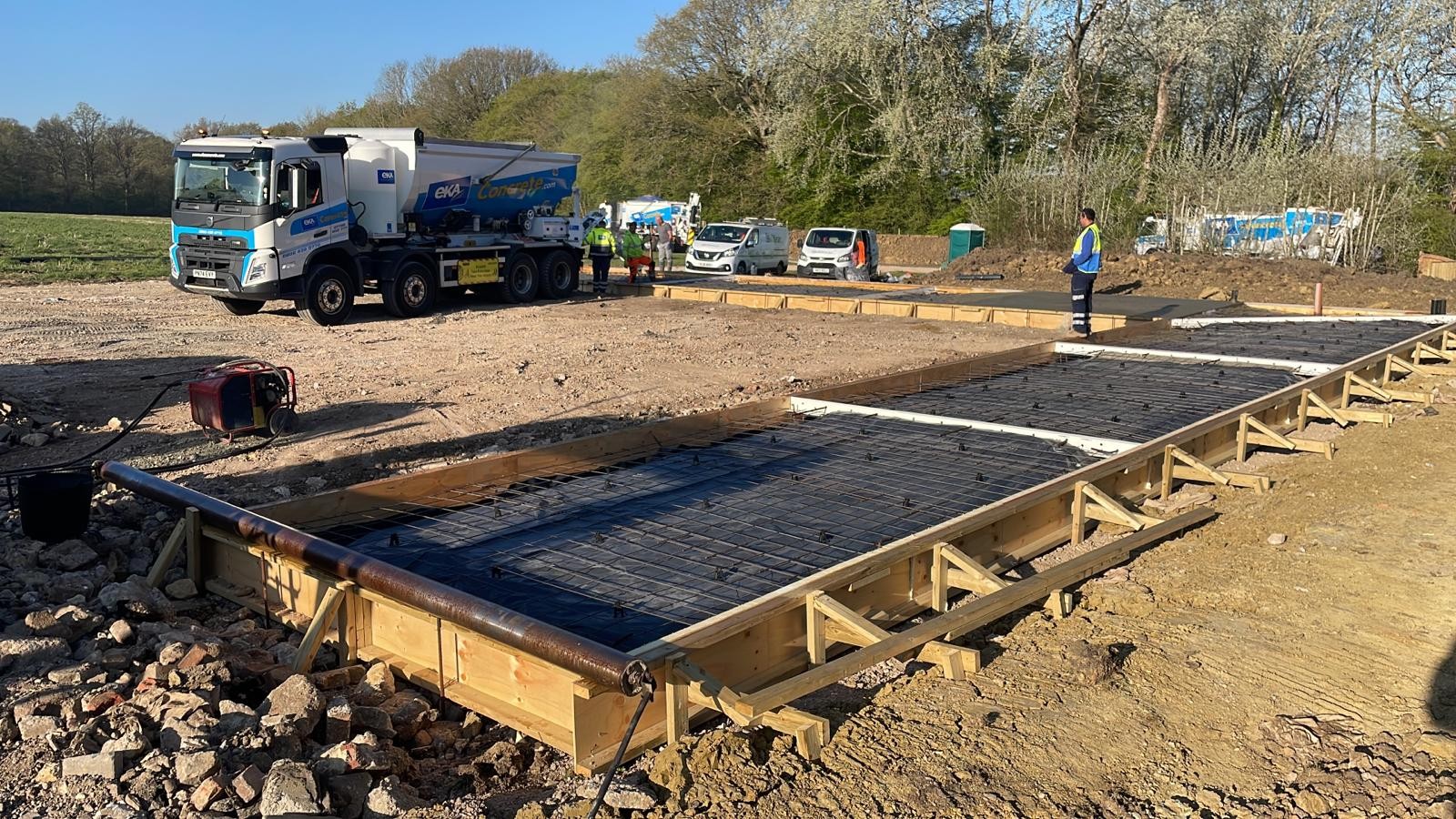
Most domestic work is placed directly from the truck into formwork. A workable mix and proper compaction are essential to achieve the intended strength.
Restricted or awkward access
Long garden runs, narrow driveways or limited working space can affect how concrete is delivered. Volumetric on-site mixing, alongside skilful concrete pump pipeline installation, can help manage access, timing and exact quantities, reducing waste.
Practical examples
Shed base at the end of a garden
A modest-strength concrete is often suitable, provided the ground is well prepared and the base is thick enough for the shed and its contents. Access may be limited, so planning delivery and barrowing or line pump routes matters.
Domestic driveway
A mid-range strength concrete is commonly used, with attention paid to sub-base quality, joint layout and curing. Where the driveway is exposed to winter conditions, air-entrainment may be specified.
Industrial or agricultural yard with frequent vehicle use
Higher strength concrete is normally required to cope with repeated loading from forklifts, tractors or delivery vehicles. Good surface finish, drainage and ongoing maintenance make a noticeable difference to service life.
Disclaimer
Use the guidance above as a starting point only. Final decisions on strength class, thickness, reinforcement, durability and curing should always be confirmed by your contractor or structural engineer before ordering. EKA will batch concrete to the agreed specification and support delivery and access planning.
Concrete considerations in the UK
Weather conditions (cold and hot)
Cold weather
Low temperatures can slow strength gain and, in severe cases, damage concrete before it has properly hardened. Fresh concrete should be protected from freezing and kept above roughly 5 °C during the first 48 hours after placement. On colder sites, this may involve insulating the slab, enclosing the pour area, or using temporary heating. Timing matters too, overnight temperatures, wind chill and exposed locations should all be considered when planning the work. You can read more information in our full guide here.
Hot weather
Warm or windy conditions can cause concrete to lose moisture too quickly, increasing the risk of rapid setting and plastic shrinkage cracking. Managing evaporation is key. This may involve adjusting working times, using set-retarding admixtures where specified, providing shade or windbreaks, and starting curing as soon as finishing is complete. Prompt and consistent curing, using membranes or coverings, helps maintain surface quality and long-term performance.

Universal best practices
Record the agreed specification clearly
Before ordering, confirm the strength class, workability, any additives and delivery method, with the contractor or engineer named as the specifier. EKA will batch concrete to the agreed specification on site.
Plan joints and drainage properly
Control joints, falls and surface water run-off play a major role in preventing cracking, standing water and future maintenance issues. Many call-backs trace back to joint layout rather than concrete strength.
Check ground conditions where relevant
Ground chemistry and moisture can affect long-term performance. Where there is any doubt, basic ground investigation and testing should be carried out before the concrete strength or type is confirmed.
Take curing seriously
Early curing affects both surface quality and durability. In cold, dry or windy conditions, curing should be extended to maintain moisture and limit rapid temperature changes during the first few days.
Follow recognised UK housing guidance
For domestic and residential projects, NHBC Standards provide useful benchmarks for durability, workmanship and acceptance.

Need help planning delivery, access or timing?
EKA Concrete supplies volumetric concrete across West Sussex, East Sussex, Surrey and Kent. On-site mixing allows you to order the quantity you need, adjust volumes to suit site conditions, and reduce waste. No under or over ordering – we deliver exactly what you need.
Frequently asked questions
What’s the strongest concrete mix?
For general reference, strength classes from C40/45 are treated as high-strength concrete and are used for demanding structural applications. These mixes should only be used where a qualified engineer has designed and approved the specification. Please note that at EKA Concrete, we only provide concrete up to a C40/C45 strength class.
Can standard concrete be used for driveways?
Yes. Many domestic driveways use C30/35, provided the slab thickness, sub-base preparation, joint layout and curing are done properly. In colder locations, air-entrained concrete may be specified to improve durability.
What’s the difference between C20 and C30?
The main difference is in 28-day compressive strength, around 20 N/mm² versus 30 N/mm² when tested with standard methods. Higher-strength classes are typically chosen for heavier loads or more demanding use, based on guidance from the contractor or engineer.
Can fast-setting concrete replace standard mixes?
Fast-setting products work well for small repairs, fence posts and rapid reinstatement. They are not a direct replacement for structural slabs or heavily loaded areas unless the design calls for them. Always check before ordering.
Reminder:
These answers are guidance only. Final decisions on mix class, reinforcement, curing and detailing should be confirmed by your contractor or structural engineer.
Why choose EKA Concrete?
Choosing the right concrete comes down to matching the mix to the job, the ground and the way it will be placed. Loads, exposure and site conditions all matter. You should rely on your contractor or structural engineer to finalise the specification.
EKA Concrete’s role is to supply dependable concrete, mixed on site to the agreed specification, with flexible delivery and practical support to keep work moving.
Reliable materials and consistent batching
Concrete is mixed on site using quality-assured materials and calibrated equipment, giving control over quantity and workability.
Concrete is mixed on site using quality-assured materials and calibrated equipment, giving control over quantity and workability.
Local coverage
Serving West Sussex, East Sussex, Surrey and Kent, with same-day or next-day delivery subject to availability.
Serving West Sussex, East Sussex, Surrey and Kent, with same-day or next-day delivery subject to availability.
Practical support from quote to pour
Delivery planning, pump hire coordination and straightforward advice when you need it.
Delivery planning, pump hire coordination and straightforward advice when you need it.
On-site volumetric mixing
You pay only for what you use. Volumes can be adjusted during the pour to suit real site conditions.
You pay only for what you use. Volumes can be adjusted during the pour to suit real site conditions.
Proven local experience
Over 20 years supplying homeowners, builders and commercial sites across the South East, with a team who understands access constraints, weather planning and sequencing.
Over 20 years supplying homeowners, builders and commercial sites across the South East, with a team who understands access constraints, weather planning and sequencing.
South of England
Areas we cover
EKA Concrete cover a vast area of the South of England. With depots in Crawley and Littlehampton we are cover a vast area:
Arundel, Billingshurst, Brighton, Bognor Regis, Bosham, Burgess Hill, Chichester, Crawley, Dorking, Eastbourne, East Grinstead, Emsworth, Haywards Heath, Havant, Horley, Horsham, Lewes, Littlehampton, Midhurst, Petworth, Pulborough, Redhill, Reigate, Storrington, Worthing
Friendly and helpful advice!
Competitive prices
No hidden extra costs
Same or next day delivery
EKA Littlehampton
EKA Concrete
Bairds Business Park
Grevatt's Lane
A259, Climping
Littlehampton
BN17 5RX
EKA Crawley
EKA Concrete
Unit 5 Acacia Grove
Copthorne Road
Crawley
RH10 3PD
Areas covered

EMAIL: sales@ekaconcrete.com
Call us for a quotation or to place an order,
Crawley Office - 01293 883 000
Sevenoaks - 01732 430 400
Worthing - 01903 650 600
Freephone - 0800 432 0770
